

Cardiovascular Disease
What your heart failure register is not telling you
Coding, registers and the four pillars in UK primary care
9 days ago · 5 min read
Browse all clinical evidence, news, and expert commentary
Coding, registers and the four pillars in UK primary care

NICE TA1152 establishes semaglutide 2.4 mg as a secondary cardiovascular-prevention treatment for adults with established cardiovascular disease and a BMI of at least 27 kg/m². Niraj Lakhani considers what this means for primary care.
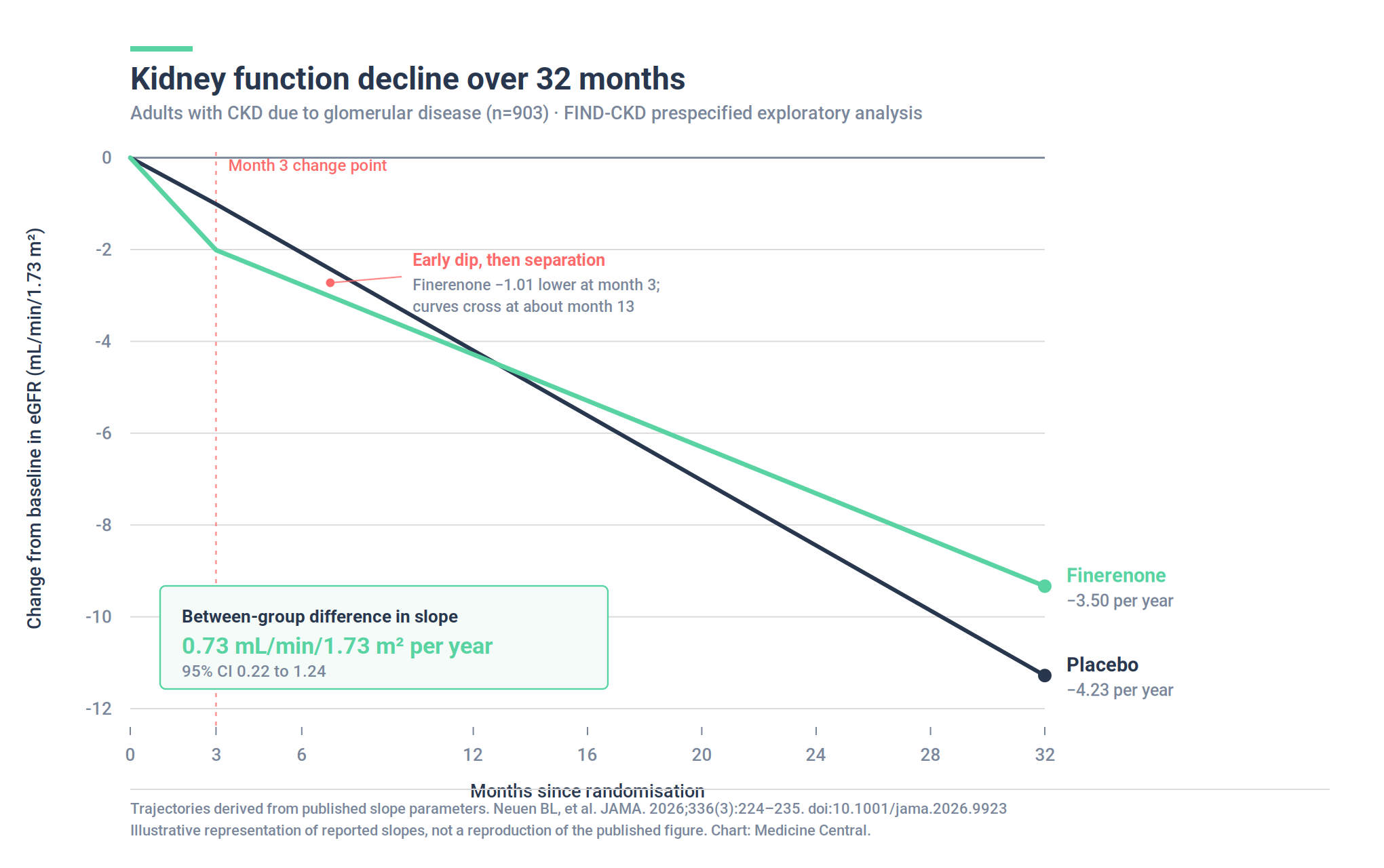
A prespecified exploratory analysis of the FIND-CKD trial reports slower eGFR decline with finerenone in chronic kidney disease due to glomerular diseases.

NICE has published final draft guidance recommending finerenone (Kerendia) for symptomatic chronic heart failure with preserved or mildly reduced ejection fraction. With nearly 280,000 people in England potentially eligible, this is a significant moment for a patient group with few disease-modifying options.
Despite excellent LDL-cholesterol management, 1 in 3 patients with established ASCVD will experience a recurrent event within three years. Elevated triglycerides represent a major — yet frequently overlooked — driver of residual cardiovascular risk. Moudy Khodadi, Advanced Pharmacist Lipid Clinic, explains the mechanism, the evidence, and what actually works.

The February 2026 update to NG28 ends that era. Most newly diagnosed patients will now be offered an SGLT-2 inhibitor alongside metformin from the outset.

Blood pressure management sits at the heart of cardiovascular prevention, yet many patients remain under-treated against optimal targets.

From raised LDL to a new non-hormonal drug class and the largest HRT safety study to date, this week is all menopause in primary care.
When a patient stops a medication, the assumption is usually that the benefits stop too. The EMPA-KIDNEY post-trial follow-up, published in NEJM, checked if this is true for SGLT2 inhibitors in CKD.

For over a decade, the question of whether to use apixaban or rivaroxaban for treating acute VTE has remained. The COBRA Trial in NEJM finally provides a head-to-head comparison.

Low-dose multi-drug pills are key and new ways to tackle resistant hypertension are emerging. Since 2022, many Phase III antihypertensive trials have been reported.

At what age do you stop offering statins for primary prevention? It's a question the guidelines can only partially answer.

Recent evidence suggests that we are 'over-testing' our hypertension patients, says a report from BJGP.